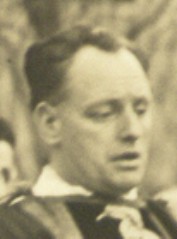
OBITUARY Father Frederick Matthews, C.P. Died: September 18th., 1969 USUALLY, news of death, even sudden death, reaches our houses by telephone or telegram. Not so however with the late Fr. Frederick Matthews, C.P. The first intimation was a brief item in the latest news column of a Dublin morning paper to the effect that an Irish priest, Fr. Frederick Matthews, aged 74, had been drowned at Palma, Majorca. For a moment of stunned incredulity the thought came that it might perhaps be a mistake. But alas, it was no mistake – it was only too true. It took more than an hour of incessant phone calls before the tragic story could be pieced together. Fr. Frederick, who would have celebrated the golden jubilee of his ordination next February, was a, passenger aboard the cruise ship S.S. Uganda. Known as the Mount Argus Cruise, it had been organized, by J. H. Lewis and Partners, Ltd., and departing from Dublin was scheduled to call at Lisbon, Naples, Palma and Tangier before returning to Dublin on September ?4th. Several Passionists accompanied the cruise. But the news of Fr. Frederick’s death was still unconfirmed. No message had come from the ship; the owners, Travel Agents. Messrs. J.H. Lewis had no information; the paper which had published the item had nothing further except that it was an Associated. Press wire item. The Department of External Affairs was contacted to get through to the Irish Embassy in Madrid but this would take time. Finally, through another newspaper office, the details were ascertained. The British Consul at Palma, contacted by phone, confirmed that the news had appeared in the Spanish papers that morning. It appeared that Fr. Frederick, a keen swimmer all his life, had gone for a bathe at Playa Mayor. He was about 100 yards from the shore when it was noticed that he was in difficulties; help reached him almost immediately, but when brought ashore he was unconscious. Quickly taken to hospital by ambulance, he was found to be dead on arrival. Fortunately Fr. Frederick had his Irish passport with him, but in the absence of any further identification or address, the captain of the S.S. Uganda had not been notified, and the ship sailed at midnight unaware that a passenger was missing. Not until his cabin was found unoccupied next morning was the alarm raised. Even then it was thought that Fr. Frederick might have missed the boat and would rejoin it later. But the police authorities confirmed the sad news when contacted by radio, and their worst fears were realized. The late Father Frederick, born Eugene Joseph Matthews, was a member of a family that had given three sons to the Passionists. Born in Belfast on March lst., 1895 and living in Chief Street almost under the shadows of the twin towers of Ardoyne, it is hardly surprising that his vocation led him towards the Congregation of the Cross and Passion. He was professed on July 24th., 1912, and having completed his studies at St. Anne’s Retreat, Sutton, Lacs, was ordained there with twelve companions on February 28th.,1920 by Most Reverend Dr. Whiteside, Archbishop of Liverpool. Some years later he was appointed Director of Students at Mount Argus, Dublin, and later was Vicar of St. Gabriel’s Retreat, Enniskillen, and for many years Vicar at Mount Argus, Dublin. In 1944 he was elected Rector of St. Mungo’s Retreat, Glasgow, and in 1947 he returned to Mount Argus, where he spent the remainder of his religious life, except for a short spell of temporary duty at St. Joseph’s Church, Avenue Hoche, Paris. Well-known in his hey-day as a preacher of missions and retreats, Fr. Frederick was especially in request for convent retreats. As a spiritual director, he had guided many vocations to fulfillment in the religious life, including some who later reached positions of authority in their respective congregations, including at least one Mother General. As a preacher he was forthright and practical. His somewhat staccato style left little room for flight. of eloquence or flowers of speech, but his sermons were followed with clone attention and both instructed and inspired his audience. All through his life Fr. Frederick was extremely active and energetic until increasing rheumatism slowed down bin characteristic quick pace. It was well known that he seldom used a ‘bus on his ordinary trips to the city. Briskly he walked the three mile to the city center and the three miles back, in summer and winter, in rain and sunshine. His favorite pastime was undoubtedly swimming and it is perhaps more than coincidence that he met his death the sea. Throughout the summer and well into the winter as often as his duties permitted him, Fr. Frederick made the pilgrimage to “The Forty-Foot”, the famous Dublin swimming place , immortalized by L.A.G. Strong n his book “The Sea-Wall. Father Frederick often remarked that was the only real democracy left in the world today, a place where a High Court Judge could go swimming in n perfect equality with a prisoner whom he had sent to gaol twelve months previously. Although born in Belfast, Fr. Frederick had a great affection for Dublin, his adopted city. He was well-read in the works of James Joyce, could discuss the merits.; of Shaw and Synge, could reminisce about the Labour troubles f 1913, the Easter Rising of 1916 and more recent historical, cultural and political events. In fact, probably the last book he read before his death wan James. Plunkett’s fine novel “Strumpet City”, although he did not agree with all the opinions expressed by the author. Father Frederick was somewhat less than enthusiastic about some of the changes introduced in the Church by Vatican II, more especially as they affected the religious life. He recognised that some of these innovations were beneficial and helpful, but he had distinct reservations about other aspects. His confidence in the future remained undiminished despite the gloomy prospects that he sometimes envisaged. Some have noted that, when embarking on the cruise to which he had looked forward eagerly, Fr. Frederick spoke about the possibility of not returning from it. Possibly he had some kind of premonition – such things have, in fact, occurred before – but he spoke of such a possibility with cheerfulness. Nevertheless it is at least unusual that death should claim him so far from home. When news of his death finally reached the ship, Fr. Salvian Maguire returned to Palma by plane from Tangier to supervise the legal formalities. The Consular authorities and the Spanish officials were most helpful in smoothing out the difficulties, and the remains were flown back to Dublin for the Requiem Mass and burial. The Mass was concelebrated by a large number of priests, including some who had been ordained with him almost fifty years before, the principal celebrant being Very Rev. Fr. Valentine, Provincial. Father Frederick is survived by his brother Fr. Kevin Matthews, C.P. and two sisters. His other brother, Fr. Theodore Matthews, C.P. died in 1967. May his good soul enjoy everlasting peace.