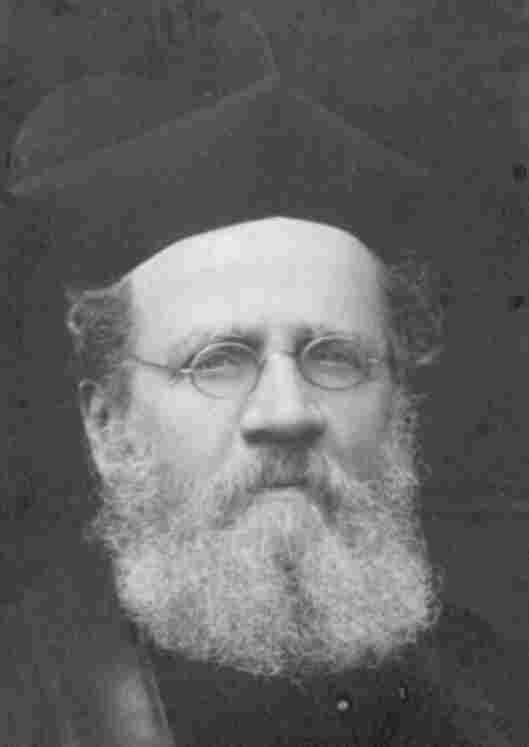
A Passionist’s Golden Jubilee. The attainment of the sacerdotal Golden Jubilee of Rev. Father Fernando Saavadra, C.P., Vice-Rector, was befittingly celebrated on 30th May at Mount Argus. The numerous tokens of esteem received by the Venerable Jubilarian on the happy occasion testified to the high appreciation of his labours in the ministry during the long span of half-a-century. His Holiness the Pope sent an autograph letter conveying the Apostolic Benediction to Father Fernando, and granting a Plenary Indulgence to all who assisted at the jubilee Mass. Numerous letters and telegrams were received, including communications from Most Rev. Father Silvius, C.P., General of the Passionist Congregation, who wrote from Cuba, where he was visiting the houses of his Order; the acting Father General, SS. John and Paul’s, Rome; Very Rev. Father Leo, C.P., Procurator General; Very Rev. Father Luigi, C.P., General Consultor; Very Rev. Father Malachy, C.P., Provincial. The Jubilarian, who belongs to a distinguished Spanish family, was born at Seville in 1847, and made his profession as a member of the Anglo-Hibernian Province of the Passionist Congregation in 1866. His ecclesiastical studies were made at Mount Argus, and his ordination to priesthood by Most Rev. Dr. Lynch, then Coadjutor Bishop of Kildare and. Leighlin, took place in St. Patrick’s College, Maynooth, in 1871. He has laboured with extraordinary zeal for the salvation of souls in various missions under the care of his Order, and filled with great success the different offices to which he was appointed. He spent some years in Australia, where he was Superior of the Passionist Retreat at Goulbourn. A notable feature of his life was his indefatigable labours in the confessional, and thousands are indebted to him for the counsel and help that he has given them in the Sacred Tribunal. He was one of the pioneers of the Passionist Order in his native land, Spain, and was the first Passionist to give a mission in that country. He is well known in Catholic circles in Dublin and Glasgow – in both cities he has spent many years of his missionary life. Father Fernando’s saintly life, devotion to duty, and singular kindness and charity have endeared him to all who have come within the sphere of his influence. Solemn High Mass was celebrated by the Jubilarian; deacon – Very Rev. Father John. C.P., Rector (Glasgow); SubDeacon – Very Rev. Father Richard, C.P., Rector (Mount Argus). The music of the Mass was rendered by the students of Mount Argus. The Jubilarian was subsequently presented with a beautiful chalice on behalf of the members of the Anglo-Hibernian Province of the Passionist Congregation. Congratulatory speeches were delivered by Very Rev. Father John, C.P.; Very Rev. Father Sebastian, C.P., Rector, Holy Cross Retreat, Belfast; Very Rev. Father Richard, C. P. ; Rev. Father Callistus, C. P. ; and Rev. Father Columban, C.P. In reply, Father Fernando, C.P., expressed his deep gratitude for the favour that God had bestowed upon him in sparing him for fifty years to labour in the Vineyard, and his heartfelt thanks to his Superiors, religious brethren and friends for all they had done to make the Jubilee celebration such a happy one – such kindness he would treasure in his heart and remember all the days of his life. (The Cross, Vol. XII, 1921-22, p. 75f.) Obituary: When on the morning of 1st May last Father Fernando Saavedra, C.P., Vice-Rector of Mount Argus, pronounced the Ite missa est at the conclusion of the Mass which he had offered (not without difficulty and suffering) he could have added a personal note, Consummatum est, for before evening came he had been called to his reward at the venerable age of 75 years. Amongst the virtues which adorned the life of this Passionist priest was a singular devotion to the Blessed Sacrament, and so as a reward – the sign of a greater one to come – God gave him sufficient strength, on the day of his death, to lift his enfeebled hands and offer the Infinite Sacrifice. For more than a Year this saintly priest had been in failing health, and under medical care. Long years of meditation on the Sacred Passion had imbued him with such a love of suffering that he allowed neither the painful malady which afflicted him nor the nights of sleeplessness to deter him from celebrating daily Mass. His special spiritual preparation, as well as the sedulous manner in which, some days before, he arranged the affairs committed to his charge, lead us to think that he had a premonition of his death. In the afternoon of the day of his death his sufferings became so intense, and his breathing so difficult, that the religious who watched by his bedside summoned the Father Rector, who administered the Last Sacraments. Thus prepared for the final ordeal, this good and faithful servant of Christ Crucified, conscious to the end, and with aspirations of Divine Love upon his lips, breathed his last. Belonging to an old and distinguished Spanish family, Father Fernando was born in Seville seventy-five years ago. In response to the impulse of a religious vocation, he applied for admission to the Passionist Order in the Anglo-Hibernian Province, was received, and after the probation of the Novitiate made his profession in 1866. Following the completion of his ecclesiastical studies at Mount Argus he was ordained priest in St. Patrick’s College, Maynooth in 1871, by Most Rev. Dr. Lynch, then Co-adjutor Bishop of Kildare and Leighlin. During his long priestly life of sixty-one years he was connected with various missions under the care of the Passionist Fathers, especially in Dublin and Glasgow, where thousands venerated him for his zeal and charity and practical sympathy for those in sorrow and distress. When his Superiors decided on making a foundation in Spain Father Fernando was one of the pioneers selected for this task, and it was his pleasing privilege to give the first Passionist mission in his native land. At the call of obedience, too, he cheerfully sailed for Australia in order to assist the work of his religious brethren in that country, and held the office of Superior at Goulbourn. On 31st May last year, Father Fernando had the happiness of celebrating the Golden jubilee of his priesthood. On that occasion congratulations poured in from all sides, presentations were made to him, and what must have brought a feeling of great joy to his heart was the receipt of an autograph letter from the late Pope Benedict XV., conveying, to him the Apostolic Benediction and granting a Plenary Indulgence to all who assisted at the Jubilee Mass. May he rest in peace. (Cross, Vol. XIII, 1922-23; pp.450 f.) OBITUARY WRITTEN BY THE RECTOR OF MOUNT ARGUS, FR. RICHARD CURRAN, C.P. THE REV. FATHER FERNANDO Justus autem si morte praeoccupatus fuerit, in refrigeric erit. (Sap., IV.7) Seldom has one of our religious been so greatly favoured at death as our late Fr. Vicar, Fernando of the Sacred Hearts. His mass on first of May – on which day he passed hence – was also his Viaticum, as it was in the precious instances of Fathers Dominic of the Mother of God and Ignatius Spencer: he died at the beginning of the month which the Church has dedicated, in an especial way, to our Blessed Mother: he was fully conscious to the end, himself holding out the back of his hands, as is done in a priest’s last anointing, lest the least item of the Church’s ritual might be overlooked, calmer than he who, weeping, gave him the last comforts of our Holy Religion. Humbly; albeit with great dignity of mien, he went out into eternity, the Sacred Names on his dying lips. Fr. Fernando was the Doyen of the Province at the time of his death, though he bore his four and seventy years lightly. , Alert, vivacious, punctual to his every duty, he seemed to defy the approaching years. Yet he was, for a long time before the end, a great sufferer. Death came almost suddenly, but in a kindly, almost painless way, to him. We, his brethren who knew him well always speak of him as a holy religious. Blessed the priest who loves the Sacrifice of the Mass as Fernando of the Sacred Hearts!. Was it not, as a singular reward for this great passion of his priestly life that, on the morning of his death, he administered to himself the Body and Blood of Christ. Jesus willed to come to His loving servant in this form of mighty Viaticum, for owing to his difficulty in breathing, Holy Communion could not be given in articulo mortis. The good priest is known by his love of the Holy Mass, and by the unction and exactness with which he celebrates: by his devotion to the Virgin-Mother of God and her Rosary; by zealous attention to his confessional; and by the devout fulfilling of the Divine Office in tempore opportuno: by his tenderness and charity to Christ’s poor: Fr, Fernando was eminent in all these – as a religious, he went before us in the observance of the Holy Rule, and was punctilious in the keeping of the tiniest details of the Regulations. We do not wish to convey that Fr. Fernando was immune from the minor faults and imperfections that are common to our poor humanity, “for there is no just man upon earth that doth good, and sinneth not” (Eccles. VII.21.). His temper was uncertain but when his words or manner wounded, he was quick to ask pardon, Hence his failure was his triumph. We too often forget to give the mead of true praise to one who wages war against a natural or acquired defect, only remembering, and uncharitably commenting on, the faults. Which is the more perfect in God’s sight, the man who has no pronounced failings to fight against, or he who has, and manfully combats it? Decidedly the latter. “But this everyone is sure of who worships Thee, that his life if it be under trial, shall be crowned” (Tobias, III, 21). Fr. Fernando, in the world, Francis Borgia Saavedra y Caro, was born in Seville on 10th October, 1847, and entered our Congregation in 1865, making his profession at Broadway in the following year. In 1871 he was ordained priest at Maynooth College, Ireland: and afterwards did missionary work in London, Glasgow and Dublin. Of our houses in these two last cities he was vicar for several years. With Fathers Amadeus of the Virgin Mary and Maurice of St. Joseph he took part in the establishment of our Congregation in Spain, but after the opening of the first Passionist retreat in Deusto (Bilbao), he returned to this Province. In 1899, h was sent to Australia as superior of our house in Goulburn, New South Wales, returning to Ireland in 1913, and two years after he was appointed vicar of this Retreat of Mount Argus, which office he held to his death. He had on 31st May,1921, the happy privilege of celebrating the Golden Jubilee of his priesthood: on the occasion he was honoured by an autograph letter from the Holy Father, Benedict XV., who also granted a plenary indulgence to those who assisted at the Jubilee Mass. In so great esteem was our deceased father held in his native archdiocese that, on receiving the tiding of his death, his Grace of Seville conceded an indulgence of 100 days to all who should perform some act of charity for the repose of the venerable priest’s soul. On Thursday, 4th May, after solemn Requiem mass in the presence of a numerous congregation, Fr. Fernando’s remains were laid to rest in our little cemetery at Mount Argus. His grave looks towards the church, wherein our Divine Lord resides sacramentally. And so, even in death, Fernando of the Sacred Hearts is fittingly near the great love of his life – Jesus in the Blessed Sacrament. Richard of the VII Dolours NOTE WRITTEN BY THE ARCHIVIST, FR. DECLAN O’SULLIVAN, C.P., ‘punctilious in keeping the tiniest details…’ As a young boy, I remember often seeing Fr. Fernando at the same hour on a Monday morning carrying the small Gladstone bag with the Sunday offerings to the bank. As a Religious afterwards I was told that on the day of his death, he tidied up the house account books, paid off every bill then due, took a bath, and then called in to the Rector’s room and asked that he be given Extreme Unction in his room. The Rector laughed at the idea of a man in good health needing to be anointed. Not long afterwards he was summoned to do just that to Fr. Fernando. As an Altar-boy, I like my companions learned from the way he used bustle us off that he wasn’t too keen on altar-boys! Declan C.P. 06.12.1973