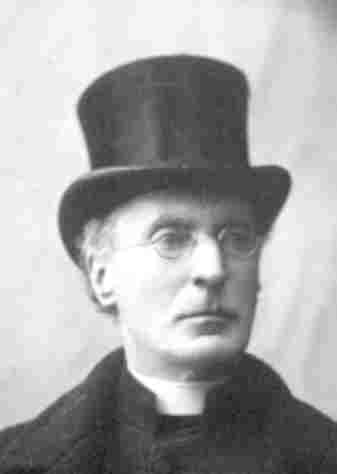
OBITUARY : Fr. John McMullan C.P. (d. 1st December 1934, aged 78 years.) A familiar figure has been removed from our midst by the passing of Father John (McMullan), C.P., whose death occurred at St. Paul’s Retreat, Mount Argus, on the morning of Saturday, December 1st, 1934. A venerable and much-esteemed member of the Passionist Congregation, Fr. John had been in failing health for some years, and his death at the age of seventy-eight was not altogether unexpected. Born in Dungannon, Co. Tyrone, on October 4th, 1856, Francis McMullan, as he was then called, received his early education at St. Patrick’s College, Armagh, At an early age he sought admission to the Passionist Congregation and was admitted to the Noviciate at St. Saviour’s Retreat, Broadway, Worcs. He pronounced his religious vows on April 26th, 1876, and subsequent to his profession he was sent by his Superiors to pursue his ecclesiastical studies at SS. John and Paul Rome. On December 20th, 1879, in the Basilica of St. John Lateran he was raised to the priesthood by Cardinal Patrizi, then Cardinal-Vicar of Rome. Fr. John loved to recall the noteworthy fact that at that same ordination, another young Levite was raised to the sacerdotal dignity namely Achilleo Ratti, now His Holiness Pope Pius XI. On his return to England, Fr. John was appointed Professor of Sacred Theology. Later on, he entered the missionary field, where his eloquence and fervour won many triumphs, whilst his hidden work in the confessional showed how he had inherited the spirit of St. Paul of the Cross. When the welfare of souls and holy obedience called Fr. John to distant lands, his truly apostolic spirit did not hesitate to respond. A volume might be written on his missionary work and varied experiences in the Argentine Republic and in Australia. In both countries he gave innumerable missions and retreats; and when out in the ” Bush stations ” his genial comradeship brought cheer and happiness to the heart of many a lonely Irish exile. Religious perfection consists in charity; and the salient feature of Fr. John’s long life was undoubtedly his wondrous charity in word and deed. Like the Beloved Disciple, whose name he bore, Fr. John never tired of preaching the Gospel of Divine Love. Indeed, it may be said with truth that no one, no matter how downfallen or outcast, ever appealed to him in vain. A capable administrator and a prudent and tactful Superior, Fr. John occupied almost every Office of trust that the Province could confer upon him. His first Rectorship was St. Anne’s, Sutton, in 1881, whilst in later years he filled with conspicuous ability the office of Provincial (1914-1920), Rector of Glasgow (1920-1926) and of Carmarthen (1926-1929). Permanent memorials of his work remain in almost every Retreat where he was elected Superior. To him is due the erection of the magnificent High Altar at St. Joseph’s Retreat, Highgate; in Glasgow he built the new Retreat and enlarged the already Spacious Church of St. Mungo; whilst the beautiful Church at Ardoyne, also erected by him, is generally acknowledged to be an architectural triumph. Fr. John was a man of extraordinary vitality, and even in his declining years he would undertake and successfully complete important tasks which would have taxed the energy and exhausted the strength of many a younger man. During his extensive travels he had gathered a fund of interesting anecdotes and reminiscence with which he was accustomed to amuse and entertain his brethren. In 1929, on the occasion of his Golden Jubilee in the Priesthood, Fr. John was the recipient of many congratulations from far and near, but of all the messages that he received two brought him special pleasure, namely that from Cardinal Pacelli conveying the blessing and congratulations of the Holy Father, and that from the Father-General of the Congregation which he had served so faithfully and so well. All who knew him and their name is legion revered him as a model religious, a priest after God’s own heart, the friend of the afflicted and the benefactor of the poor. May his good soul enjoy eternal rest. A large and representative congregation attended the obsequies at St. Paul’s Retreat, Mount Argus, on Monday, December 3rd. (ex. “The Cross” January 1935, Vol. XXV, p. 371) [Edited versions of the above appeared in the daily papers on the day of his funeral.] FATHER JOHN OF JESUS CRUCIFIED On Saturday morning, 1st December 1934, the community of St. Paul’s Retreat Mount Argus, were summoned to the bedside of the doyen of St. Patrick’s Province, Father John (McMullan) who after a long but not painful illness, borne with edifying resignation to God’s Holy Will, was breathing his last. This venerable religious, who had attained the age of 78 years, had already received the Last Sacraments, and while the prayers for the dying were recited he went to his reward. The obsequies, at which the Right Rev. Monsignor Cronin, V.G., presided, took place the following Monday, and were attended by the Provincials of St. Patrick’s and St. Joseph’s Provinces, the Rectors of St. Anne’s Retreat Sutton, and St. Mary’s Retreat, Harborne and all the Superiors of St. Patrick’s Province, as well as by a representative assembly of both secular and regular clergy. The Solemn Requiem mass was celebrated by Rev. Fr. Austin, C.P. (Nephew of the deceased Passionist) who afterwards recited the prayers at the graveside. A native of Dungannon, Co. Tyrone, where he was born on 4th October 1856, Father John received the name of Francis at Baptism. From the pious associations of a good catholic home he went to the primatial city of Armagh, where, under the tutelage of the Vincentian Fathers, he acquired a knowledge of the classics, and at the same time made steady progress in the spiritual life. Responding to a vocation to the religious state his application for admission to our congregation met with favourable consideration, and he entered our Novitiate at St. Saviour’s Retreat Broadway, passed through the probation period successfully, and was admitted to profession on 26th April 1876. Privileged in being sent to our Mother House at Rome for his studies for priesthood, his character and ideals were moulded according to the example and teaching of our Holy Founder. Thus, well equipped in theological science, as well as in a knowledge of the customs and traditions of our Congregation, by a happy coincidence he was ordained on the same day (20th Decr. 1879) as Our Holy Father Pope Pius XI, in the Basilica of St. John Lateran, by Cardinal Patrizi, Cardinal Vicar of Rome. For over half a century Father John took an active and prominent part in the history of our Congregation. He possessed that spirit of Christian manliness which inspired him to undertake with courage and confidence any duty, no matter how difficult and perplexing, which holy obedience imposed upon him. Knowing that he was endowed with qualities of prudence, tact and quick perception, his Superiors often consulted him and sought his aid when confronted with any task which required wisdom and diplomacy to grapple with. The sequel shows that he was never found wanting, and that the confidence reposed in him was not misplaced. After his ordination, Father John returned to England, and having spent some time as Lector, entered the missionary field. In this work of the Apostolate, both on the platform and in the confessional, he laboured with untiring zeal and fervour, and during the course of his long life brought back many sinners to the feet of Our Crucified Master. In search for the lost sheep he went far afield to the Argentine and Australia. We can easily understand the fatigues, hardships and physical discomforts which he underwent, and the long and wearisome journeys in the backwoods which fell to his lot, when giving Missions at the “Bush Stations”. The Capitular Fathers on many occasions showed their appreciation of Father John’s qualifications for Superiorship. His first appointment was that of Rector of St. Anne’s Retreat Sutton, in 1881, and in subsequent years was elected Rector of St. Joseph’s Retreat, Highgate, St. Mungo’s Retreat Glasgow, Holy Cross Retreat Belfast, and St. Paul’s Retreat, Adelaide. His last office was that of Rector of St. Mary’s Carmarthen, from 1926 to 1929. At the Chapter held in 1914, Father John was elected Provincial of St. Joseph’s Province, and in the following Chapter the Fathers set the seal of their approbation on his wise and prudent government by re-electing him to this responsible and onerous office. In 1903 the Paris Church and house of the Congregation, in Avenue Hoche, were threatened with confiscation by the French Government, owing to the operations of the law against religious orders. No effort was spared by the Congregation to keep the Church open and save the property. Our claim to exemption, although supported by the sympathy and co-operation of the ecclesiastical authorities in Rome, Paris and England, and espoused by the British and American Embassies, met with strong opposition, and it was only after a long drawn out and anxious struggle that a compromise was arrived at. The result was that the Church was spared from the fate of other religious churches in Paris, and remained with its doors open for public worship. Father John was selected by the Superiors of the Congregation to complete the arrangements with the French Government and in carrying out these somewhat complicated and delicate negotiations, he displayed a finesse and diplomatic tact which proved that no mistake was made when the interests of the Congregation were entrusted to his capable hands. Material proofs of Father John’s zeal are to be found in the new edifices which he erected, or in the improvements which he effected in existing Church buildings. He built the substantial Retreat of St. Mungo’s in Glasgow, and enlarged the already spacious Church. The splendid sanctuary and High Altar with its noble baldachin, at St. Joseph’s Highgate, were also due to his initiative. But his greatest success is undoubtedly Holy Cross church Ardoyne, Belfast, which, complete in all its details, is an enduring monument to Father John’s sound judgment and architectural taste. In 1929 Father John had the happiness of celebrating his Golden Jubilee in the priesthood. The gladness of the occasion was considerably enhanced by the fact that amongst the congratulatory messages which he received was one from Cardinal Pacelli, conveying the blessing of His Holiness the Pope, as well as one from our own Father General. Among the virtues which beautified Father John’s life his charity – and charity includes all the virtues – stood out prominently. St. James eulogises the perfection of the man who does not offend in speech, and Father John was exemplary in this respect. Whilst faithful to conscience, principle and duty, he was ever ready to cast the mantle of charity on the action of others and to assist the needy and afflicted. It is an axiom of Catholic teaching that from the contemplation of the things around us we can come to a knowledge of God. Father John was often seen absorbed in meditating – on the beauties of nature – no doubt he used this means as a reminder of God’s presence and God’s providence. We can well believe that he who during life was an apostle of charity, and loved and preached Christ Crucified, is now enjoying a sight more enduring and enrapturing than the vistas of this world could give, the Beatific Vision. Requiem aeternam done ei Domine. Et lux perpetua luceat ei. Signed: Adrian of the VII Dol. Rector. Golden Jubilee of Fr. John (McMullan), C.P. A NOTABLE and really happy event in the history of the Passionist Congregation took place on December 20th, when Father John (McMullan), C.P., was privileged to celebrate the Golden jubilee of his Priesthood. Fifty years ago, in the famous Basilica of St. John Lateran, Rome, His Eminence Cardinal Patrizi, then Cardinal Vicar of Rome, raised to the sacerdotal dignity the young Passionist, who, at that time a member of the community of the Mother-House of SS. John and Paul, had completed his theological course. Time has dealt kindly with Father John; for, though he has borne the heat and burden of the day for seventy-three years in many lands and in various offices involving much labour and self-denial, he is still active in the services of his Divine Master and able to fulfil his duties in the pulpit and confessional with a zeal which would reflect credit on many a much younger man. Born in Dungannon, Co. Tyrone, on October 4th, 1856, Francis McMullan, as he was then called, received his early education at St. Patrick’s College, Armagh. When but a boy, he showed a decided vocation for the religious state; and his application for admission to the Passionist Congregation having been favourably entertained, he was sent to the Novitiate at Broadway, Worcestershire, where he made his Profession in due course. He had the privilege of being chosen by his Superiors to pursue his ecclesiastical studies in the Eternal City, and, during his course, to live in the Retreat wherein our Holy Founder, St. Paul of the Cross, lived and died. On his return to the Anglo-Hibernian Province, the first appointment that awaited him was that of Professor of Sacred Theology. Later on he entered the missionary field, wherein his eloquence and fervour as a preacher of Christ Crucified and his hidden work in the confessional showed how he had inherited the spirit of his sainted Founder, while his footsteps seemed never to grow weary in his search for the lost sheep. Religious perfection consists in charity; and the salient feature of Father John’s life has been his wondrous charity in word and deed. The Beloved Disciple, whose name he bears, never tired in preaching the Gospel of Love and so it is with the subject of this sketch; he ever practises the virtue which is the “bond of perfection,” and no one, no matter how downfallen or outcast, has appealed to him in vain. Capable as an administrator, and exercising wisdom, prudence and tact in ruling, we need not wonder that he has occupied almost every office of trust that the Province could confer upon him from the year 1881 to 1929, his first Rectorship being that of St. Anne’s Retreat, Sutton, Lancs. The difficult and trying task of raising funds for church building or the extension or improvement of existing edifices was nobly undertaken by him. We have traces of this zeal almost wherever he was appointed Superior. In Glasgow he built a new Retreat and enlarged the already spacious church of St. Mungo. To him is due the erection of the magnificent altar – an artistic gem – in St. Joseph’s Church, Highgate, London, while the beautiful church at Ardoyne, Belfast, also erected by him is generally acknowledged to be an architectural triumph. When the welfare of souls and holy obedience called for Father John’s services in distant lands, with true apostolic spirit he did not hesitate to respond. A volume might be written on his missionary work in the Argentine and Australia. In both countries he gave innumerable missions and retreats, and when out at the “Bush stations” he brought cheer and happiness to the breast of many an Irish exile. In this crusade, it need scarcely be said that he, like many another missionary, had to suffer many things for the Name of Christ. Having all these facts in view, it seems only fitting that the highest honour in the gift of the Province was conferred upon him when he was elected Provincial – a position which he held with conspicuous ability for six years. Since his call to the Priesthood, half a century ago, Father John, having put his hand to the plough, has never wavered or looked back. His escutcheon during that long period has remained untarnished. All who know him – and his friends and clients are many – revere him as a model religious, a priest after God’s own Heart, the friend of the downcast, and the benefactor of the poor. Ad multos annos! COLUMBAN TYNE, (The Cross, Vol. XX, 1929-30; p. 321)