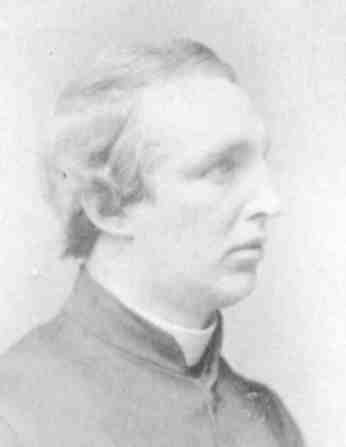
Fr. Laurence Kieran, C.P. Often it has been observed that, as a reward for special devotion to Our Blessed Lady, the privilege of being called to their reward on one of her feasts has been the happy lot of many of her spiritual children. A dominant feature in the life of Father Laurence Kieran, C.P., who, at the venerable age of 83, died at Mount Argus, on the feast of the Annunciation, was his filial confidence, in the interacession of the Mother of God. His religious life extended to the long span of sixty years, and at his death he was senior priest of the Anglo-Hibernian Province. A native of the Co. Louth, where he was born at Collon in May, 1837, he was called to the religious state and entered the Passionist Novitiate, Broadway, Worcestershire, where, after the usual time of probation, he had the happiness of making his profession on 8th December, 1860. Having completed his ecclesiastical studies, he was ordained at Saint Joseph’s Church, Highgate, London, on the 27th November, 1864, by the Right Rev. Dr Morris. Those who have had experience of church building know full well the arduous nature of the task. It was to this work that obedience called Father Laurence, and during many years he cheerfully devoted himself to the collection of funds for the building and upkeep of the splendid church, dedicated to St. Paul of the Cross, which has been erected at Mount Argus. He made an extended tour throughout the United States, and his appeal met with a generous response from the Irish exiles. Exacting though his active duties were, they did not diminish his love for religious observance, and of this he gave abundant proof when he returned to the solitude of the retreat. Heroically he struggled against the disabilities of old age that he might offer the Holy Sacrifice, and though it cost him much pain he continued to celebrate up to a short time before his death. Loving his Congregation with his whole heart, observing its rules with fidelity, and ever cultivating personal sanctification, Father Laurence perservered to the end in the practise of those virtues which tend to religious perfection, and beautify the soul for the life to come.