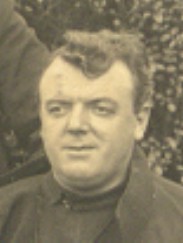
REV. FATHER IGNATIUS OF THE SEVEN DOLOURS. It was the Feast of the Exaltation of the Holy Cross, and the Vigil of the Feast of the Seven Dolours of our Blessed Lady. On that day of such intimately Passionist association a simple, touching scene took place in a Dublin Nursing Home. By the bed-side of an ailing priest sat a brother Passionist who had watched devotedly. He looked at the patient, who showed signs of improvement, and spoke a word of cheer: “You seem better to-day.’ There was an answering smile of gratitude, and then: “I think the Old Warrior is going home.” Thus with resigned foresight, and just a suggestion of the dramatic, so much a part of his nature, did Father Ignatius face the call which came to him on the following day, 15th September, 1952, the Feast of the Dolours of the Mother who was the devotion and the love of his life. Francis Gibney was born in Dublin on 4th November, 1889, and received his early education at O’Connell Schools in that city. He made his novitiate in St. Savior’s, Broadway, and was ordained in Dublin in 1913. The early years of his priestly life were spent in Holy Cross, Belfast and St. Anne’s at Sutton. On the formation of St. Patrick’s Province he was appointed to St. Gabriel’s, The Graan, Enniskillen. After many years he was transferred to St. Paul’s, Mount Argus, and about five years ago was sent as one of the first community of the newly founded St. Michael’s, Dankeith, Kilmarnock. He was a member of that community until the time of his sudden and lamented death. Mere words are powerless to pay adequate tribute to the memory of this great Passionist. or to express the loss which his death has occasioned. It was typical of the man that he himself, in his last hours, should have turned the phrase which might most fittingly be at once his epitaph and obituary. “The Old Warrior is going home.” In the black-robed army of the Crucified he was indeed, a valiant warrior. He looked older and was more feeble than his sixty-three years, and all because of his relentless, wholehearted. self-giving campaigning for his Master. Ireland, England, Scotland and Wales knew the persuasive power of his eloquent pleading in the cause of his Darling Lord, and the rich harvest of souls which his untiring efforts reaped gave testimony of the sincerity of the heart whence that pleading came. He was, like his Father and Founder, a true Hunter of Souls. Whether it was, to the spell-bound multitude of some great occasion, or to the faithful few of some Catholic outpost, the energy and eloquence of his preaching was the same. One soul was of infinite value and in the light of that principle he measured his effort. What others might deem hopeless or impossible he accepted only as a challenge to his zeal; and he never shirked that challenge. Neither time nor effort nor fear nor human respect could dismay or deter him in his crusading for souls. In his dramatic delivery and spontaneous gesture he was inimitable; in his versatility he was unequalled. He could touch and pierce and win the heart of the hardened sinner, and he could fire with fervour every member of a convent community; he could enthrall a church of tiniest children, and he could enrapture a congregation of Cistercian monks. And all would plead that they might again be favoured with the blessing of his services. Yet his preaching was but a shadow of his greater quality, his appeal as a Confessor. Long hours or bodily fatigue meant nothing when he was engaged in this work of his heart, and to his dying day his zeal in this regard was as great and as generous as it was on the day when first his hands were chrismed with the anointing of the priesthood. His patience was endless, his kindness was without limit. Wherever he was penitents flocked to him, for they knew that in this great, consoling, understanding priest they would find the sympathy and the succour of a true “alter Christus.” Among his own Brethren it was the same. Few other confessors were sought when Fr. Ignatius was available. His love for the suffering and the sorrowing made him their beloved and lasting friend. Everywhere they gathered around him; daily he was inundated with correspondence seeking his advice, his consolation and his prayers. And they never sought in vain. But, despite all his greatness and appeal, he was ever a Religious of unspoilt simplicity and humility. He would seek the opinion of the lowliest of the community as to the merit of a manuscript, and would accept and put into effect any criticism offered. His generous nature would not suffer him to retain in his possession anything which he thought another desired or needed. In community life he was an ever-popular member. His keen, but always kindly, humour made merry the time of recreation and his dramatic declamations were an accepted and essential feature of every festive occasion. There was no community that did not welcome the sound of the quaint, shuffle of his sandalled feet. A community was happier for that sound. But, above all, he was a man of deep, child-like faith. Wherever he went, whatever the reason for his journey, his Mission Crucifix was an essential item of his luggage. He would not travel without It. Though death came unexpectedly, far from his community and at a time when he was not engaged in apostolic work, it was his own Mission Crucifix he held in his dying hands. His tender devotion to the Little Flower, to whose intercession he always attributed the fact that a serious impediment in his speech had not hindered his ordination, was an enthusiasm of his life. He sought to make it so in others. And it was of her he spoke in his last illness. His, indeed, was a great spirit. Though medical advice had long insisted that the condition of his heart demanded that he should rest and relax, he could never resist the call of the apostolate. “I’ll die in harness,” he always countered. And he did. Precisely a month before his death he concluded a retreat to the Sisters of Nazareth at Kilmarnock. At the end of the retreat he had a heart attack. The doctor ordered a complete change and rest. It was decided that he should go to Dublin to recuperate. But another Physician decreed that the change should be lasting, the rest eternal. A sudden seizure, a few days of ebb and flow, and then, to the great edification of all, quietly and at peace Fr. Ignatius surrendered his great spirit to Him whom he loved so dearly, whom he served so well. In the shadow of Mount Argus by the side of another great brother-soldier of the Cross, Fr. Paul Mary Pakenham, rest the mortal remains of Fr. Ignatius of the Seven Dolours. The Old Warrior has gone home. We loved him in life; let us not forget him in death. May he rest in peace. Signed: Fabian of Jesus Crucified, Rector. FR. IGNATIUS (GIBNEY), C.P. AN APPRECIATION BY THE MANAGING EDITOR WITH deep regret we chronicle the death of Rev. Father Ignatius (Gibney), C.P., which occurred on Monday, September 15th. For the past few years, though he was active in fulfilling works of the ministry, he enjoyed only indifferent health and was subjected from time to time to heart attacks. Up to a fortnight before his death he appeared to be reasonably well and was engaged in conducting retreats, a work always dear to him. He took ill, however, while on a visit to Ireland and passed away peacefully some days later on the Feast of the Sorrows of Our Blessed Lady. Known in the world as Thomas Francis Gibney, Father Ignatius was a native of Dublin, where he was born on November 4th, 1889. He received his early education from the Irish Christian Brothers at O’Connell Schools and was associated as a youth with the Jesuit Fathers of St. Francis Xavier’s, Gardiner Street, where for many years he served Mass. It was to the Passionists, however, he was attracted when he felt the call to the religious state; and accordingly in 1907 he entered the Passionist Novitiate at St. Saviour’s Retreat, Broadway Worcs. After his Religious Profession on January 30th, 1908, he pursued the usual course of ecclesiastical studies and was raised to the Priesthood by His Grace Most Rev. Dr. Walsh, Archbishop of Dublin, at Holy Cross College, Clonliffe, on December 21st, 1913. Subsequent to his Ordination he was appointed to the Passionist Retreats at Broadway, Worcs.; Holy Cross, Ardoyne, Belfast; and Sutton, Lancs. In 1927, at the foundation of St. Patrick’s Province, he was transferred to St. Gabriel’s Retreat, The Graan, Enniskillen, where he remained many years and celebrated the Silver Jubilee of his Priesthood in 1938. The latter period of his priestly life was spent at the newly-established Retreat of St. Michael’s, Dankeith, Kilmarnock, Ayrshire. If ever it could be said of a priest that he spent himself doing good to others, it must he said literally of Father Ignatius. In a life, prodigious in acts of charity and apostolic ministry, he was to many, inside and outside his congregation, the realisation of the ideal priest and the perfect friend. His valuable counsel was sought by all, both clerical and lay; and, however humanly unsolvable their problems, however apparently hopeless their troubles, they were surrounded with a sympathy so solid in its sincerity that they were at once made to feel that their burden was somehow lightened. For here was a priest who had that indefinable but unmistakable quality of a great personality of being able to convey at once to those seeking his aid that their concerns were his concerns and well worth his all-absorbing and helpful consideration. By thousands he will be remembered as a counsellor, a confidant and a priestly friend who gave them treasured support in the testing time of trial. While those in every form of human affliction enjoyed the ever-ready response of his wide human sympathy, it was the sick, in particular, who claimed his unreserved affection and thought. To this apostolate he devoted his whole life, bringing to it all the finer qualities of a really lovable character. The happiness he brought to many a sick room and hospital ward; the comfort and strength he could call forth in many a poor patient about to face the operating theatre; the peaceful hope and resignation he could inspire in those about to die – these were kindnesses towards the sick that will be registered fully only in Heaven. From the human viewpoint, surely they bear eloquent testimony to the deep sense of simple faith of the great, self-sacrificing priest who fulfilled them so generously. In the sphere of missionary activity it is no exaggeration to say that to Father Ignatius is assured a place of imperishable prestige among the really renowned missioners and preachers of these countries. Though he had all the easy fluency of the forceful and impressive speaker, his unique ability in this regard seemed to radiate more from the very presence of the preacher himself. It was his earnestness, his sympathetic approach to and understanding of the spiritual needs of his audience which very obviously determined the magnetic message he gave. His hearers, whether they were clergy, religious or laity, gathering at once from the sincerity of his words that he had the spiritual welfare of all so very much at heart, gave him their rapt and sustained attention. Even the very young were attracted to him in a remarkable way when he spoke to them. If the phenomenal crowds, however, who gathered to hear him wherever he preached right to the end of his life, singled him out as a really eminent missioner, even more tangible and reliable evidence of this was to be found in the countless penitents who waited patiently but gratefully in repentance outside his confessional-box. Always the truly zealous servant of the Good Shepherd, he felt that as long as there were souls in quest of his priestly ministration, however late the hour, however trying the circumstances, for him – that was a call to duty to which he must give himself selflessly and unsparingly. Perhaps, the one trait in Father Ignatius’s appealing character which most impressed those who had the privilege of knowing him and which unquestionably made him so beloved by all was his simple humility. Gifted above the ordinary for his special vocation in life and possessed of a disposition which won for him friendship and popularity wherever he went, he remained to the end engagingly unspoiled in outlook. While another, held in smaller estimation. might have paraded his eminently successful efforts in the ministry, he characteristically shunned looking for the laurels and limelight of personal glory, attributing everything to the grace of God and the goodness of heart of those to whom he ministered. With his brethren in religion he was ever an edifying and affable companion. For everyone. even the youngest religious, he had a hearty greeting that bespoke so well the warmth of his own feelings; and endowed with a ready sense of humour and a fund of anecdote he could enliven any company with a gaiety that was delightfully infectious. To the end he was the same genial and gentle religious: whatever trials were sent to him, he remained the noble example of fortitude to his brethren, never permitting at any time even the suspicion of acrimony or impatience to mar his Christlike character. Just as one can keep gazing interminably at a beautiful picture, and still see even more attractive features in it, so one could go on recounting the memorable things of. the life of Father Ignatius and still feel that one is conveying only a suggestion of his greatness. Suffice it to say that he left this world in the way and on the day he would have wished himself: active on missionary work to the last and passing away peacefully on a great Passionist Feast – Our Lady’s Sorrows, his lifelong devotion. We who had the happiness of his friendship are the poorer by his passing; still we have our treasured memories of him: a religious who lived out so generously the dedication of himself at the Altar of his Profession; a priest who had given such tremendous service to God; a Passionist who devoted his whole life to pointing out to souls the way back to the Feet of Jesus Christ and Him Crucified. May he enjoy from the Good Master he served so well eternal rest and reward! To his family, who have since been bereaved by the death of Mr. Patrick Gibney, brother of the late Father Ignatius, we offer our heartfelt and prayerful sympathy. (The Cross, Vol. XLIII, 1952-53; p. 116f.)