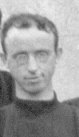
REV. FR. FINIAN (CONNELL), C.P. On Wednesday, April 25th, we received notification of the death of Rev. Fr. Finian (Connell), C.P. of St. Joseph’s Province, which took place at St. Anne’s Retreat, Sutton, St. Helen’s, Lancs. Fr. Finian was born at Delvin, Co. Westmeath on November 7th, 1881. For some years he was engaged in business with a Dublin firm before he joined the Passionist Congregation in 1916. He made his Religious Profession on July 29th, 1917 at St. Saviour’s Retreat, Broadway. Worcs., and, having pursued his course of ecclesiastical studies was ordained in 1920. A well-known missionary in England and Wales, Fr. Finian was stationed at most of the Retreats in St. Joseph’s Province, including St. Saviour Novitiate, Broadway, Worcs., where he was Rector. We ask our readers to join us in our earnest prayers that God may grant eternal rest to his soul. (The Cross, Vol. XLII, 1951-52; p. 29.) Father Finian Of The Mother of God The death late at night on the 24th of April 1951, after a long illness born at with exemplary patience, of Fr Finian of the Mother of God, brought to a peaceful close a life in which a deep humility, allied to an unfailing charity, had endeared him to all with whom he came in contact, but especially to the community of St Anne’s retreat, where he had passed the last years of his life Peter Connell, as he was known in the world, was the eighth child of a large family of seven boys and four girls, two whom became missionary nuns. He was born on the 7th of November 1881, at Delvin, Co Westmeath, Eire, and went to school at the age of five years. Never of robust health, he yet made satisfactory progress at the hands of a good school mistress, who gave him his first rudiments of English, writing and arithmetic. At the age of 12 he was transferred to a larger school, and there prepared for a commercial career. In due course he went to business, in Dublin, where by hard work and good conduct he so won the esteem of his employers that he was invited by them to take charge of one of their branch houses. Peter, however, had by now for some time been contemplating devoting his life to the services of God in religion. And with this end in view had been taking private lessons in Latin. Faced now, rather unexpectedly, with the generous offer of his employers, he experienced an interior conflict, which nevertheless was of short duration. Grace triumphed over the bright prospect of a successful business career, and, somewhat to the surprise of his employers he tactfully declined the offer. He succeeded in obtaining the consent of his parents, who, though good and pious, were at first opposed to was entering religion; and after studying for a shorter time in Waterford, where he completed his philosophic of course, he received a call to a more perfect life, and was accepted as a cleric by the Provincial of the Anglo/Hibernian Province of the Passionists, entering the novitiate July 1916. The following year, he was duly professed, and after a course of studies shortened by those he had already undergone, he was ordained on September the 18th 1920. In the course or were 30 years in the priesthood which followed, Fr Finian worked fruitfully and well in the parishes attached to our Retreats in London, Sutton, Carmarthen and Broadway. He was elected Rector of St Saviour’s Retreat, Broadway by the Provincial Chapter headed in 1941; and re-elected rector there, by the following chapter of 1944. His superiorship in Broadway was marked by a gentleness and simplicity which won the hearts of all; and he was well loved not only by the community, but by also by the people of the parish, whose interest he had always at heart and for whom he worked unsparingly. In spite of his frail health, he led the way for both novices and the professed in the keeping of the full observance, never exempting himself from any of the community exercises except for matters of serious necessity. This good example had its effect, with a consequence that during the six years that Fr Finian was Rector of the Novitiate House at Broadway, the Passionist life there flourished in all its vigour, led by one whose simple piety and warm-hearted charity was an inspiration to all It may however be said without fear of contradiction that Fr Finian’s greatest work was that done so unobtrusively, and yet so thoroughly well, at Ammanford, at that time one of the outlying districts of our parish in Carmarthen, but today a separate parish with its own secular parish priest. He was absolutely unsparing of self, in his spiritual ministrations to the scattered members of his flock; with the result that he succeeded not only in keeping alive the flame of the fate there, but even in causing it to burn more strongly. The people of Ammerford still speak of him in affectionate terms as the founder of the parish, although it is so many years since he worked in that locality; and it will be long before they forget one whose frail strength was so often spent in their behalf. Fr Finian’s health began to fail a few years ago, when first he suffered from a stroke. Recovering from this but partially, he remained for some time a semi-invalid, confined for the most pert to his room, but able to visit the choir, the refectory and the recreation room. He said Holy Mass as long as he had the strength to do so; but subsequent relapses left him weaker than ever and for about six months before the end he was able to say Mass occasionally and with the aid of a priest. The final stroke came about 10 days before his death. And Alexian brother, Brother Bartholomew, was brought into the Retreat to nurse him, as the doctor had advised that it would be dangerous to try and move the patient to hospital. In spite. however, of Brother Bartholomew’s gentle and efficient nursing, Fr Finian never recovered consciousness; although it was difficult at times to judge whether or not he responded to the prayers whispered into his ear from time to time. Father Rector anointed him soon after the stroke had occurred and when the Doctor and Nursing Brother announced that the end was near, the community was summoned to the patient’s cell, and the prayers of the dying restated. He lingered on a short time longer and finally at about 11:30 p.m. in the presence of several members of the community, who were reciting the Rosary, he passed away, a look of peacefulness and rest upon his face. Well indeed made the words of Holy Scripture be applied to him: “Blessed are the dead who die in the Lord. From henceforth now, sayeth the Spirit, that t they may rest from their neighbours for their works follow them”. Apoc. XIV, 13. May he rest in peace. Colman of the Sacred Heart, Rector.